(432) 741-9427
(432) 741-9427

Polished Concrete vs. Epoxy Flooring: Which Is Better?
Choosing a floor for a commercial building can be difficult. You need something that looks professional, handles daily wear and tear, and fits your budget.
Two popular flooring solutions are polished concrete and epoxy. Both are installed over a concrete slab, but they work in different ways.
Polished concrete improves the existing concrete surface. Epoxy creates a protective coating over it. When comparing polished concrete vs epoxy flooring, the right answer depends on how the space will be used.
Basic construction
The concrete itself is ground and polished
A resin coating is applied over concrete
Appearance
Natural concrete with different sheen levels
Wide range of colors, textures, and finishes
Maintenance
Regular dust removal and cleaning
Regular sweeping, cleaning, and inspections
Chemical resistance
Limited
Stronger when the correct system is selected
Best Use
Dry commercial spaces
Industrial, wet, or chemical-exposure areas
Floor life
Can provide decades of service
May last many years before recoating is needed
Slip resistance
Depends on finish and maintenance
Texture can be added to improve traction
Polished concrete is made by grinding and refining the surface of an existing concrete floor. A densifier may be applied to make the surface harder. The floor is then polished to the desired level of shine.
Because the floor is the concrete itself, there is no separate coating that can peel away. However, cracks, patches, stains, and color differences in the slab may still be visible.
Many businesses choose polished concrete because it provides:
Polished concrete floors are often used in warehouses, offices, stores, showrooms, and other dry commercial spaces.
Before you install polished concrete, the existing slab should be inspected. Old coatings, deep stains, weak concrete, and previous repairs can affect the final appearance.
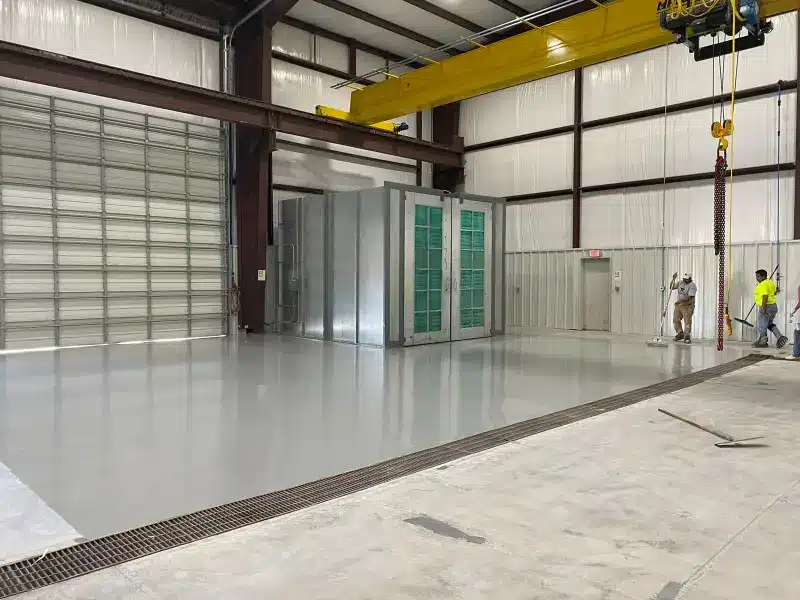
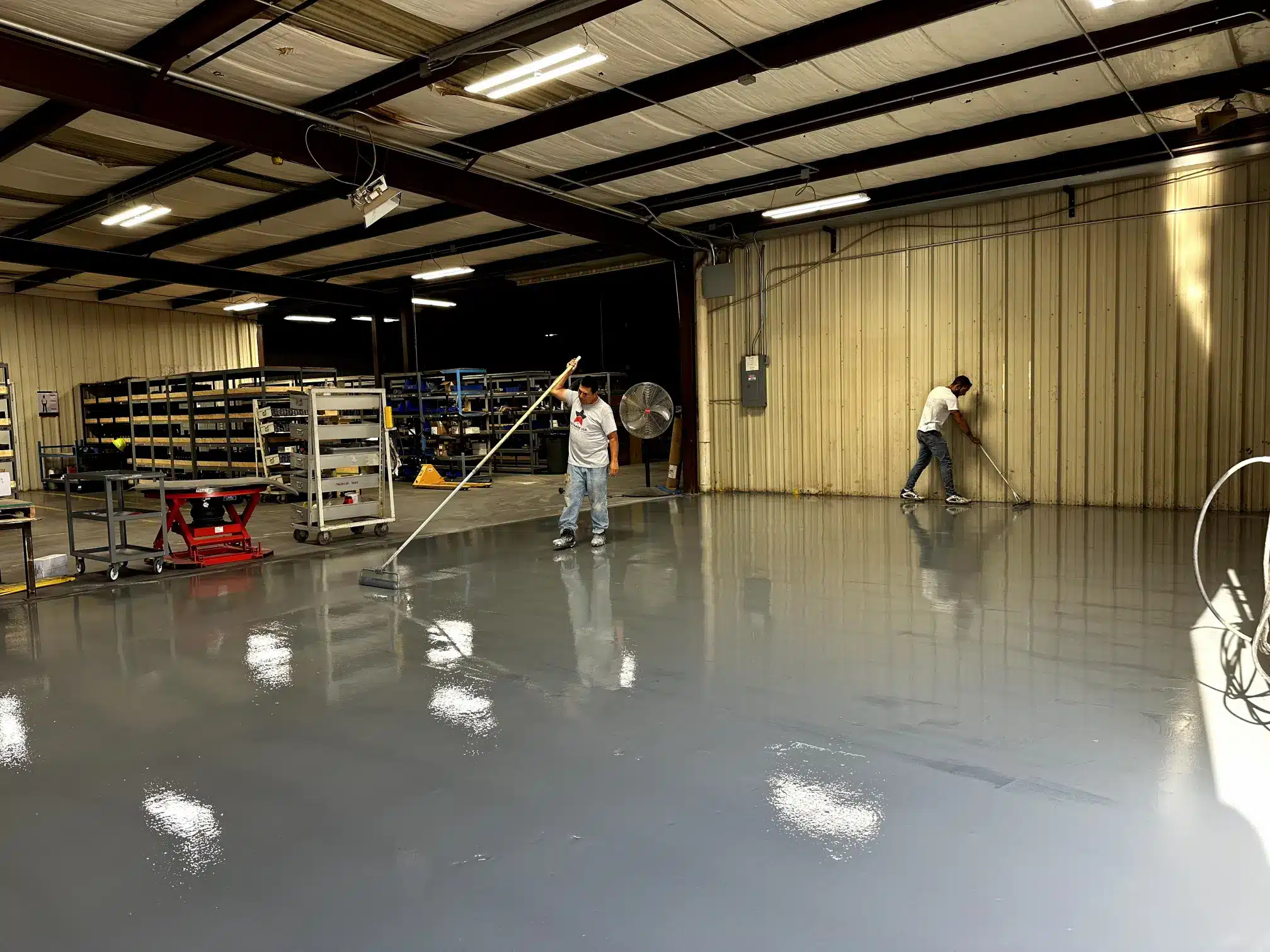
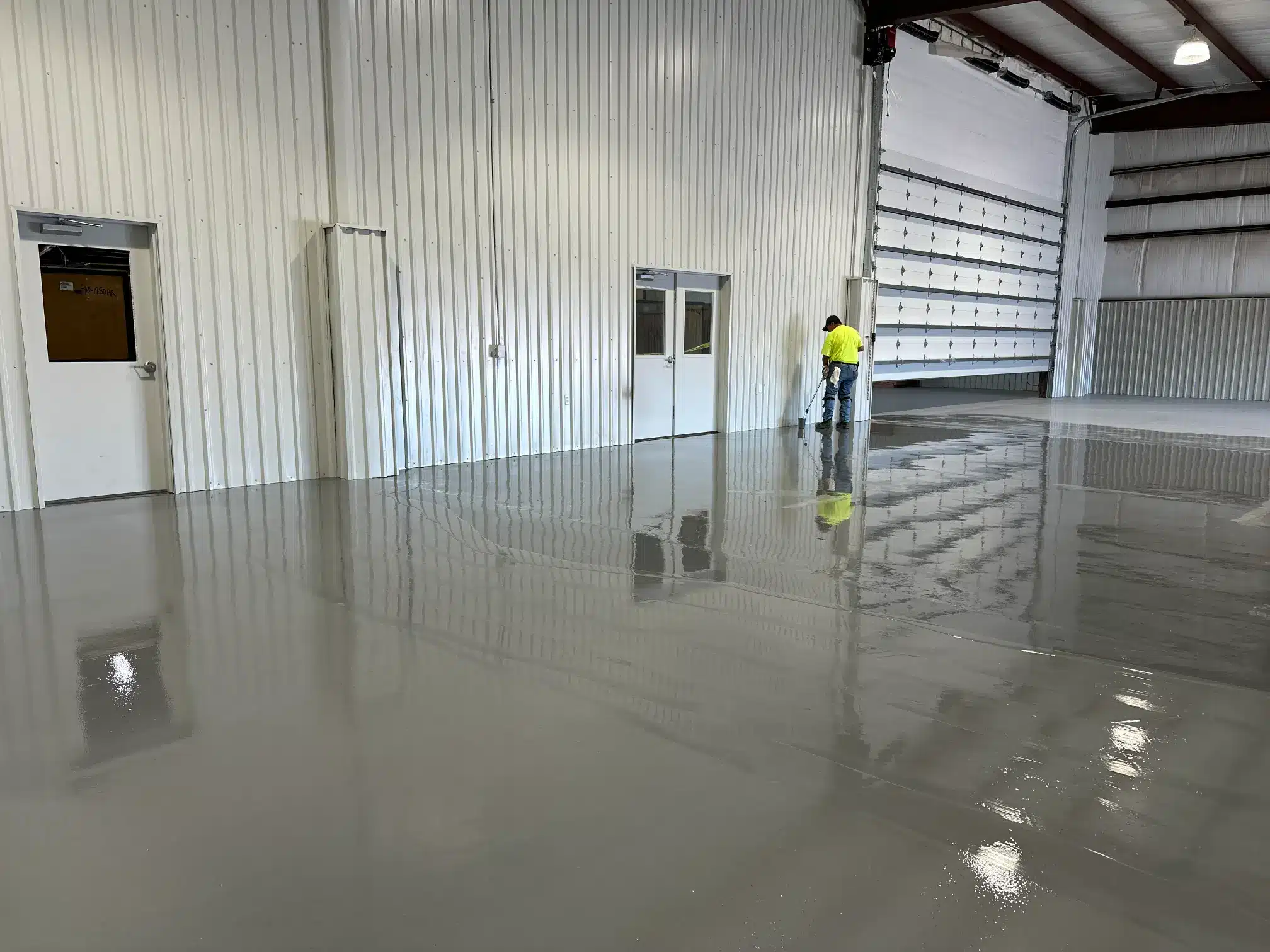
Epoxy flooring is made by combining resin with a hardener. Once cured, the material forms a strong coating bonded to the prepared concrete.
Professional epoxy coatings may include several layers, such as a primer, body coat, textured material, and protective topcoat. The exact system should match the traffic and working conditions inside the building.
Businesses often choose epoxy because it can provide:
Epoxy is often used in manufacturing plants, commercial kitchens, mechanical rooms, medical facilities, and warehouses. It can also work well around heavy machinery when the system is designed for that use.
Both floors can be durable, but they handle damage differently.
Polished concrete is part of the slab, so it does not have a coating layer that can separate. Over time, it may lose some shine or develop scratches and stains.
Epoxy protects the slab with a separate surface layer. It can offer greater resistance to spills, oils, and abrasion. However, the topcoat may eventually need to be renewed.
Some professionally installed flooring systems can remain in service for 20 years or more. Actual floor life depends on preparation, traffic, chemicals, cleaning, and maintenance. No contractor should promise the same lifespan for every building.
For facilities that regularly use oils, industrial cleaners, acids, or other chemicals, epoxy is usually the better flooring choice.
Polishing can make concrete harder and easier to clean, but it does not turn it into a chemical-resistant barrier. Epoxy systems can provide stronger chemical resistance, but the coating must be selected for the specific substances used in the facility.
Polished concrete has a natural appearance. The amount of visible stone and the level of shine can be adjusted, but the finished floor will still show some variation.
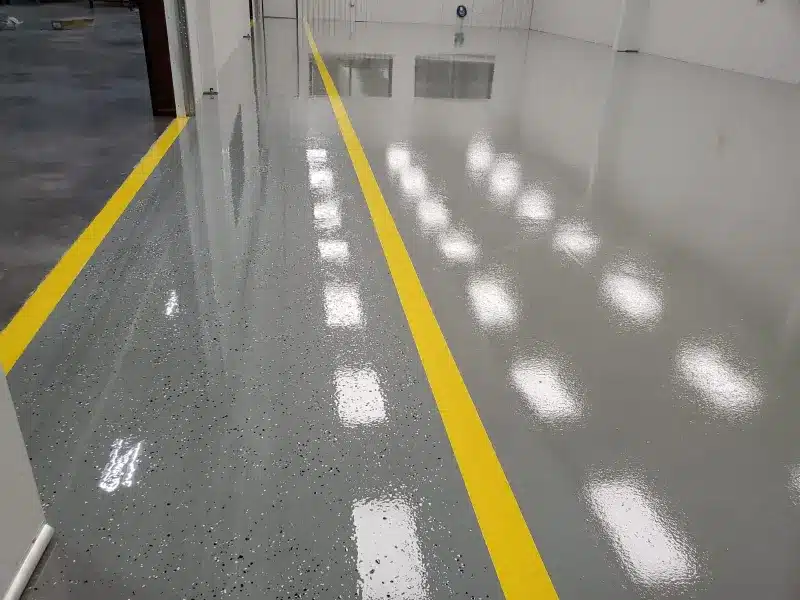
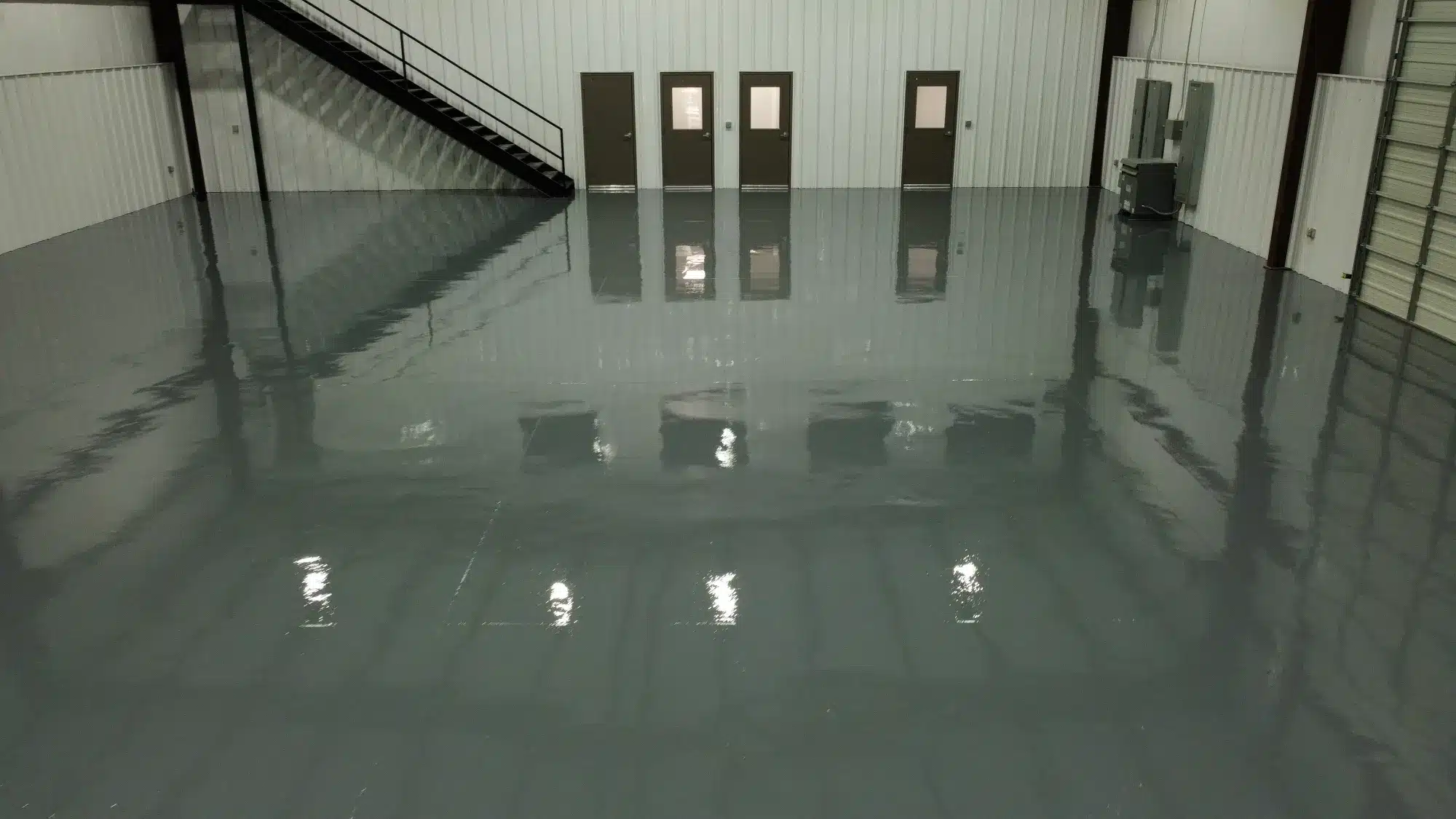
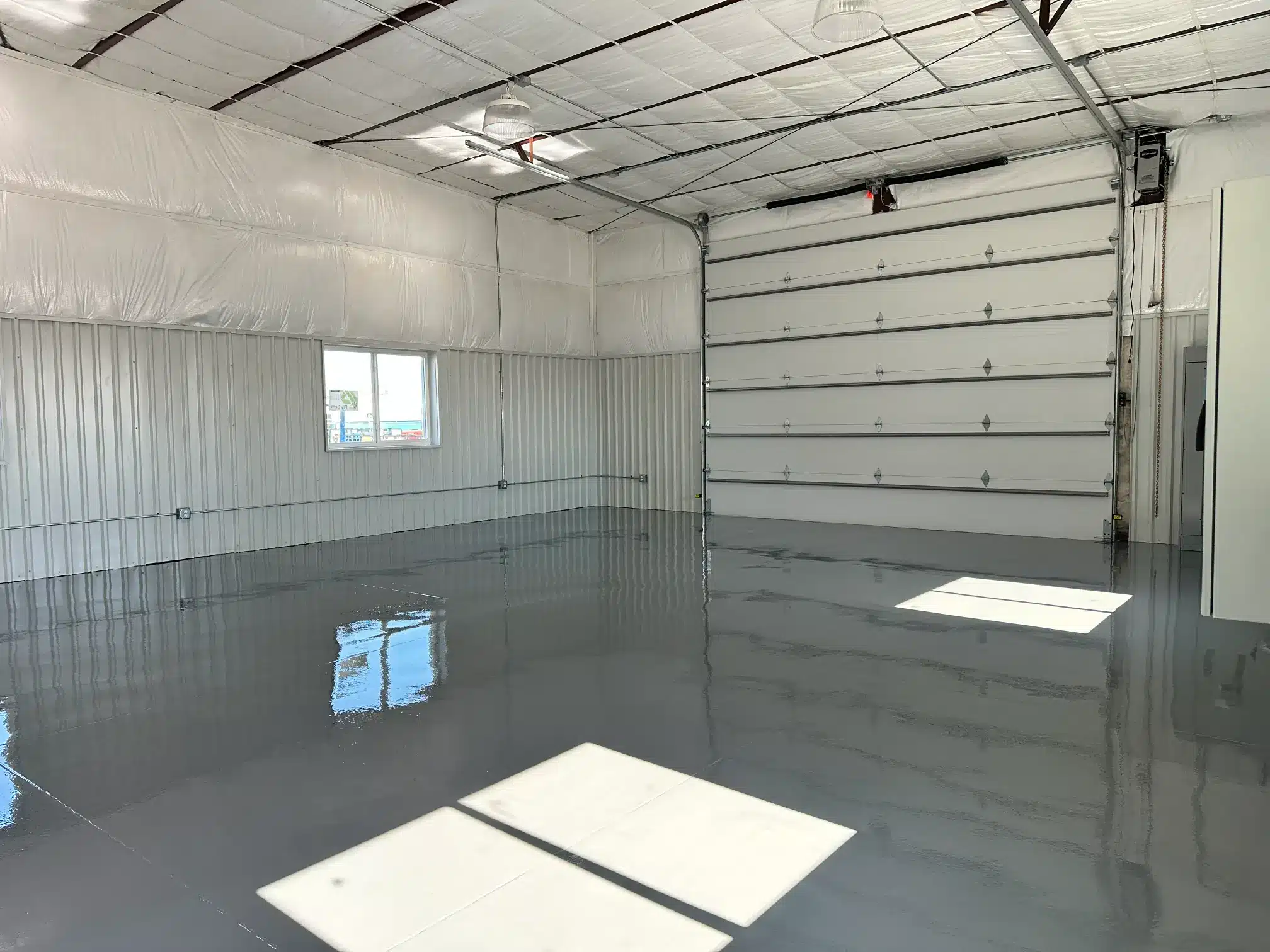
Epoxy provides more design control. It can include solid colors, decorative flakes, safety lines, work zones, or textured finishes.
If you want the natural character of concrete, select polished concrete. If you want consistent color or operational markings, select epoxy.
Both polished concrete and epoxy require regular cleaning.
Sand, dirt, and small pieces of metal should be removed before they scratch the floor. This is especially important in West Texas, where tracked-in sand can act like an abrasive under tires and equipment.
Polished floors may need occasional burnishing to restore their shine. Epoxy floors should be inspected for worn areas so the topcoat can be renewed before the underlying system is damaged.
The upfront cost depends on slab condition, repairs, preparation, materials, finish, and building access. Contractors commonly estimate both systems by the square foot, but a reliable price requires an inspection.
Polished concrete can be a cost effective option when the slab is in good condition and the facility does not need strong chemical protection.
Epoxy may cost more when multiple layers, added texture, or specialized chemical protection are required. That added protection may reduce future repair costs in demanding environments.
The least expensive installation is not always the least expensive floor to own.
Polished concrete can be considered an eco friendly option in many projects because it uses the existing slab as the finished floor. It may require fewer added materials than a separate flooring system.
However, environmental impact depends on the products used, transportation, installation process, maintenance, and expected service life. Sustainability should be considered alongside safety and performance.
When choosing polished concrete or epoxy for commercial floors, start with the way the space operates.
Choose polished concrete for:
Choose epoxy for:
Some facilities use epoxy and polished concrete in different areas. A warehouse might use polished concrete in dry storage sections and epoxy in maintenance or chemical-handling zones.
The question is not simply which material is better. It is which material is better for your building.
When comparing an epoxy floor vs polished concrete, consider traffic, chemicals, moisture, appearance, maintenance, and downtime. Polished concrete works well in many dry commercial spaces. Epoxy is often the better option when the slab needs more protection.
Top Texas Concrete Flooring can inspect your floor, review how the space is used, and recommend the right system for your facility.
Request a flooring evaluation for your commercial or industrial property in Midland, Odessa, the Permian Basin, or West Texas.